


The Whoop Meridian takes a screenless fitness tracker that usually looks sporty and turns it into a luxury accessory. Rather than a silicone band, you’re looking at a tapered metal mesh band, magnetic clasp, and four finishes designed to look more at home alongside jewelry than running shoes. Whoop is selling Meridian in Gold, Rose Gold, Alloy, and Black for $149 starting today.
There’s just one small problem. One of Whoop’s biggest ideas is that you’re supposed to wear its tracker continuously, and higher-tier Whoop 5.0 memberships even include a wireless power pack that can charge the tracker while it remains on your wrist. But unfortunately, Meridian can’t do that.
Looking better means taking it off
Whoop’s wireless charger cannot send power through Meridian’s metal band, so the tracker has to come off before it can be charged. So you’re not getting that convenient feature on Whoop’s existing design, particularly for users obsessive enough about continuous health data to dislike gaps in their tracking.
The company addressed the new design in its official announcement, talking about how it now matches the occasions where people might normally remove a fitness tracker — dinners, events, travel, or simply situations where a fabric sports band doesn’t complement what they’re wearing.
The Milanese-style mesh, tapered silhouette, and continuously adjustable magnetic clasp are supposed to turn the Whoop into something closer to jewelry. I can see the appeal. During our review of the Whoop 5.0, we found the standard model comfortable and unobtrusive. Though its chunky fabric-band appearance was one of the hardware’s weaker points. Meridian addresses that complaint rather directly.
Google’s Fitbit Air makes this look expensive

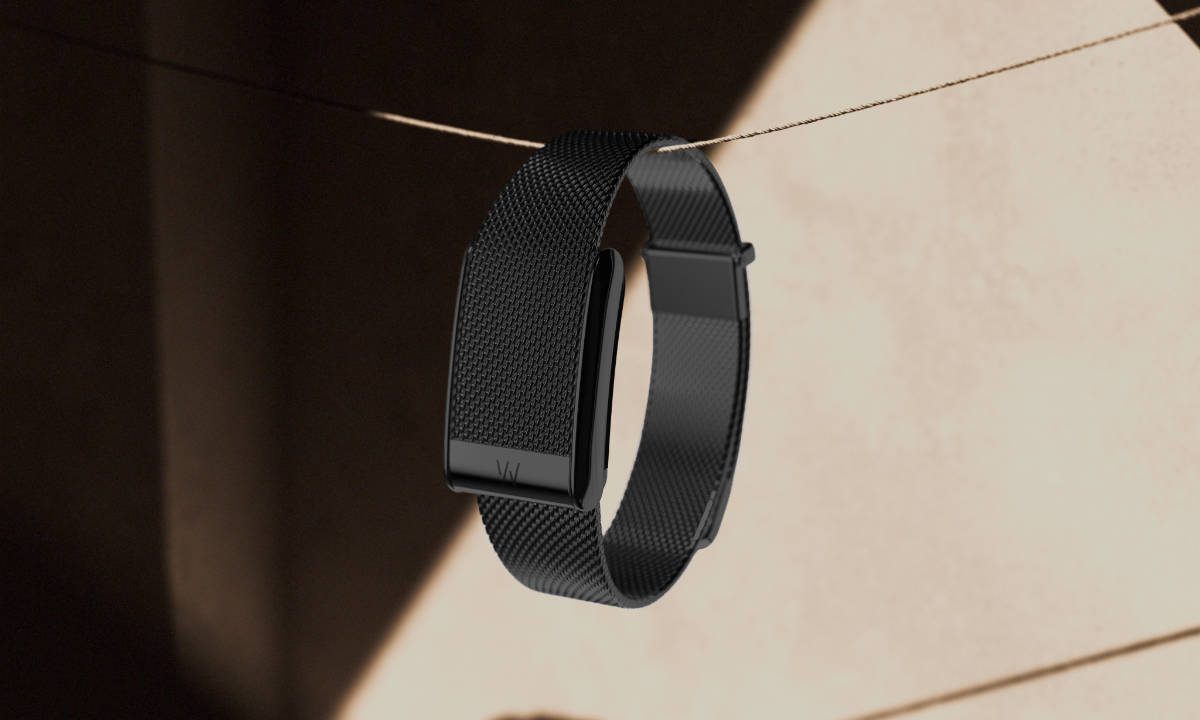
Meridian costs $149 for the band alone. You still need compatible Whoop hardware and an active membership, with Whoop’s subscriptions starting at $199 per year. Meanwhile, Google will sell you an entire Fitbit Air for $99.99. That’s a complete screenless health tracker with 24/7 heart-rate monitoring, sleep tracking, workout detection, up to seven days of battery life, and compatibility with Android and iOS. More importantly, its fundamental health-tracking features continue working without paying for Google Health Premium.
The two products are targeting slightly different customers. Whoop leans much harder into detailed recovery, strain, and performance data, while Fitbit Air is deliberately aimed at making passive health tracking simpler and cheaper. For $50 less than Whoop’s new strap, Google gives you the tracker too. So it mostly makes sense for users already in Whoop’s ecosystem.