
For lots of small businesses, design studios, makers and print farms, 3D printing is no longer about making a single prototype. The problem is what happens when demand increases. A print farm may have to print identical parts in a run. A design studio could go through several iterations for various clients. A small manufacturer may need to juggle prototypes, replacement parts and short run production without constantly expanding its equipment footprint.
But in each case, a standard desktop 3D printer can suffer from the same problem: A machine may be able to print quickly, but a single printhead can still be a bottleneck. You have to take all the jobs in order.
LightMake believes there is another way to do desktop 3D printing. Its new LightMake L4 is based on four independent printheads that can work in tandem, so the machine can perform multiple printing jobs at the same time rather than a single toolhead having to do all the work sequentially.
It is an approach built on productivity, but not just in the traditional sense of faster printing. The bigger idea is to rethink how a desktop printer handles workflow, particularly for users who need to churn out more parts, juggle multiple jobs or work with multi-color prints without constantly interrupting the production process.
Founded in 2025, LightMake describes its larger mission as helping to improve access to professional manufacturing for SMBs, makers and educational institutions. One of the company’s biggest steps toward that goal is the L4, which combines four independent printheads, linear motors, a large build volume, vibration damping and a focus on reducing material waste.
Breaking the single printhead bottleneck
One of the first specs people tend to compare when evaluating 3D printers is print speed. Faster motion can, of course, reduce the time to make a part, but speed alone doesn’t solve all production challenges.
Think of a print farm producing dozens of identical parts. If the machine only has one active printhead, then even a fast printer will still need to process each job sequentially. The same problem exists if a design studio is working on several projects at the same time. The printer has one urgent job, and everything else can wait. The LightMake L4 goes a different way.
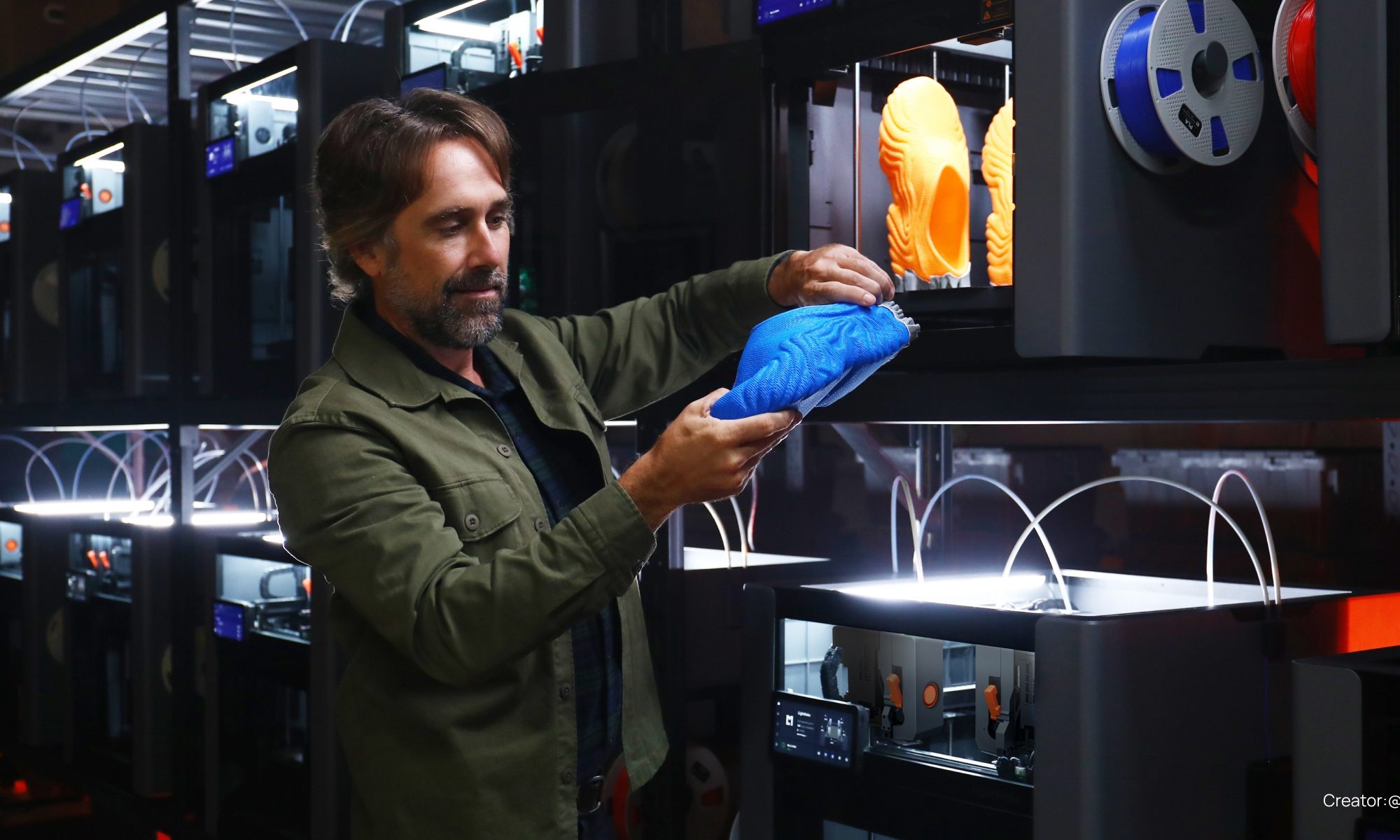
The machine uses four separate printheads that can run in parallel instead of requiring one printhead to speed up across all jobs. This enables multiple printing tasks to be performed simultaneously in the same machine. This could be a turning point for companies that produce batches of similar or identical parts. Users may be able to consolidate more of that work into a single system, rather than having to purchase and manage multiple different printers to increase capacity.
It’s not just about saving time on one object. It is for better total throughput. For example, a print farm with increasing order volumes could use the L4’s four independent printheads to run multiple jobs at the same time. If a studio were doing a few iterations, they could work on different parts without waiting for the print to finish before starting another .
LightMake says the L4 can print up to four times faster on single-color models than a traditional single-printhead workflow. But the greater bonus may be the flexibility behind that performance. Instead of forcing all the work through a single printhead, the printer is designed to spread the work around.
The four printheads can also change the multi-colour workflow
The four-printhead design is not limited to the production of multiple single-color parts. Multi-colour 3D printing adds another source of friction. A printer might need to stop or change materials as it moves between colors depending on the workflow. This can add time to a job and complicate the process of production.
The LightMake L4 is intended to work with up to four colors and there are different printheads for different filaments. Instead of changing toolheads or switching colors in a project, the printer can use its independent printheads to address those materials more directly. This could make for a much more efficient process for users when dealing with multi-color models.
For example, a designer, who is building a prototype of a product using parts of different colors, does not need to think of the printer as one tool constantly changing roles. The four printheads are designed to enable different materials or colors to be available as part of the same workflow. That might mean less interruption and less management of toolhead or filament changeovers.
There might be an upside in sustainability as well. Changing the filaments repeatedly may also lead to material waste, especially if there is excess material generated due to multi-color printing. LightMake specifically cites filament waste reduction as one of the main advantages of the L4. This enables multiple printheads to take care of different colors, thus reducing the number of unnecessary material changes and improving the production process.
For businesses that produce large quantities of multi-color objects over time, even small gains in material efficiency can begin to matter more. So the L4 approach brings together two concepts that don’t always play well together in the desktop 3D printing space: higher productivity and more efficient use of material.
It’s quality that matters, and productivity is only important when the quality is there
Of course, it only makes sense to produce more parts if those parts are consistent. For the professional user, a failed print is more than just wasted filament. It can also mean lost production time, missed deadlines, recalibration and additional labor. That’s where the underlying hardware architecture of the LightMake comes into play.
The L4 utilizes a direct drive linear motor system for precision of ±1μm. LightMake says its optimized toolhead movement is designed to improve stability, and help to reduce the failure rate compared to other consumer-grade 3D printers. The machine also features a vibration-damping design to control unnecessary movement during operation.
This is especially important for a printer with four independently operating printheads. The whole premise depends on the system’s ability to handle many active tools without making parallel production a compromise on consistency. The linear motor architecture and vibration dampening are designed to ensure smoother and more controlled movement throughout the printing process.
The specs also suggest that LightMake is aiming for more than just the usual entry-level desktop printer. The L4 has eight linear motors and four tool heads. Maximum print acceleration is 20 m/sec2. Maximum travel speed is 1,000 mm/sec. Maximum print speed is 500 mm/sec. Nozzle Temperature: 320 °C; Heated Bed: 110 °C
It is compatible with a variety of materials such as PLA, ABS, PETG, TPU, ASA, PVA, PET, PLA-CF, PETG-CF, PA, and PC. Those specs provide the machine versatility for different kinds of users and projects, from prototypes and design models to more demanding functional parts.
Great for companies with room to grow
LightMake L4 is definitely not being sold as a bare-bones hobbyist printer. The target audience is SMBs, makers, educational institutions, design professionals, print farms, and users looking to upgrade to more capable desktop-scale manufacturing. One of the reasons is its build volume. The L4 allows a maximum build volume of 354 x 370 x 386 mm³ for single-model, single-color printing. The build volume for four-color, single-model printing is 354 x 350 x 386 mm³.
This gives the user the ability to create larger prototypes or increase the number of smaller parts created in one cycle. It also features a 6.5-inch color touchscreen, 4GB eMMC storage with support for external USB storage, a dual 1560 x 720, 30 fps camera setup, auxiliary model cooling, and OTA support. Taken together, these features suggest a product for users who want their 3D printer to be more a part of an ongoing workflow.
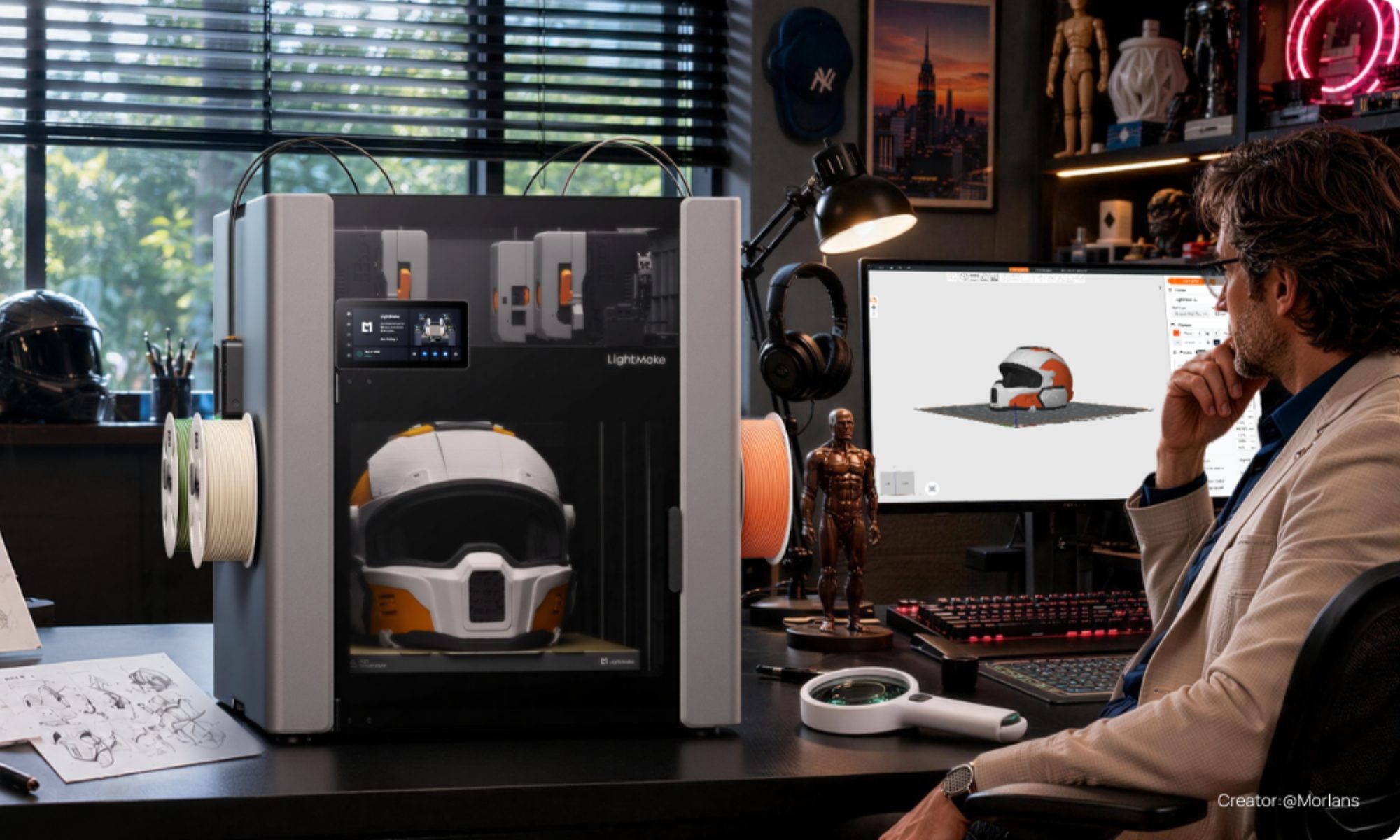
That matters. If you’re a casual user who only produces the odd replacement part or decorative model, a conventional single-printhead printer may be just fine. But when you start to make in volume, the workflow is just as important as the specs of the machine. How many jobs can you handle at once? How often does the machine need to stop for material change? How much time is spent on managing many printers? How much material is wasted in the production? The LightMake L4 is built to answer these kinds of questions.
Another perspective on desktop manufacturing
Desktop 3D printers have been steadily improving in speed, precision and ease of use. LightMake’s L4 takes a different approach, focusing on what happens when a printer has to do more than one job at a time. The answer is four standalone printheads running in parallel.
The architecture is intended to provide a way for print farms and small production businesses to increase throughput, and for designers and makers to more conveniently do multi-color printing. Using different printheads for different colors can reduce breaks due to material changes, and the company’s drive to minimize filament waste adds another layer to its productivity narrative.
Meanwhile, the combination of linear motors, ±1μm precision, vibration damping and large build volume is meant to provide the consistency required for more demanding production workflows. LightMake is not only aiming to speed up desktop 3D printers. To make them work in a different way.
The LightMake L4 is based on the premise that as 3D printing becomes a larger part of small scale manufacturing, productivity should no longer be defined solely by the speed at which one printhead can move. It can also be defined by how well multiple printheads can work in unison. LightMake is taking the L4 to market via a Kickstarter launch, the next step for a company dedicated to bringing professional manufacturing tools to smaller companies, makers and other users.
In the end, the L4’s success will be determined by how well that four-printhead approach works in actual production. But the basic notion is difficult to dismiss. The future of desktop 3D printing may not be simply about making one printer go faster. It may be a case of one printer doing more work.
Digital Trends partners with external contributors. All contributor content is reviewed by the Digital Trends editorial staff.