
4 Factors Shaping How We Design Human-centric Spaces Today
People spend around 90% of their time indoors, yet many still underestimate how deeply interior environments shape the way they think, feel, and function. A home can sharpen the mind or quietly weaken it. It can create calm, or increase tension in ways that are not always immediately visible. This is why human-centric design has become one of the most important priorities in architecture and interiors today.
At NKEY Architects, this shift is becoming increasingly clear across residential projects. Clients are looking for spaces that are more than simply beautiful. They want homes that support mood and support daily life.
Here are four factors shaping that shift today.
The Psychology of Space
Wellness-focused residential properties are now commanding a 10% to 25% price premium over traditional homes. Light, colour, scale, and spatial order all influence emotional state, mental clarity, and even decision making.
Cooler tones may help support focus and alertness, while warmer, deeper shades tend to create a stronger sense of comfort and ease. A room can be visually impressive, but if it feels chaotic, it can still be mentally exhausting. By contrast, spaces with clear zoning and balanced proportions often feel calmer and easier to live in.
Behaviour-driven Design
The best interiors are built around how people actually move, pause, gather, work, and rest. Rather than treating layout as a visual exercise, designers are thinking more carefully about how spaces guide behaviour throughout the day.
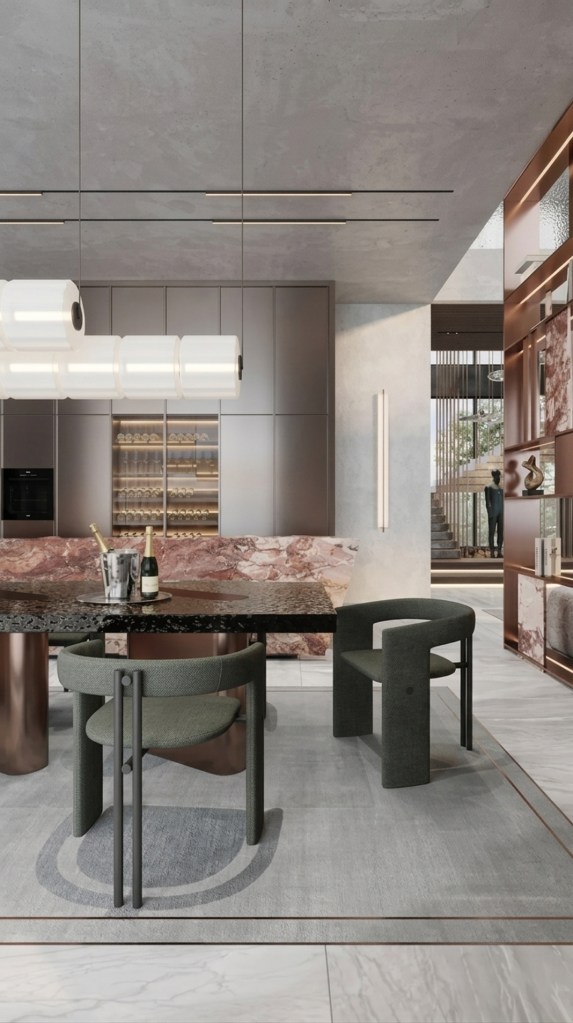
Open-plan zones can encourage communication and togetherness, while quieter enclosed areas create room for privacy and focus. Ceiling height can also influence the way people think, with higher ceilings often linked to abstract thinking and lower, more intimate spaces supporting concentration and detail.
Sensory Experience in Interiors
Proximity to natural elements such as greenery and sunlight has been associated with a 15% increase in reported wellbeing and creativity, alongside a 6% increase in productivity.
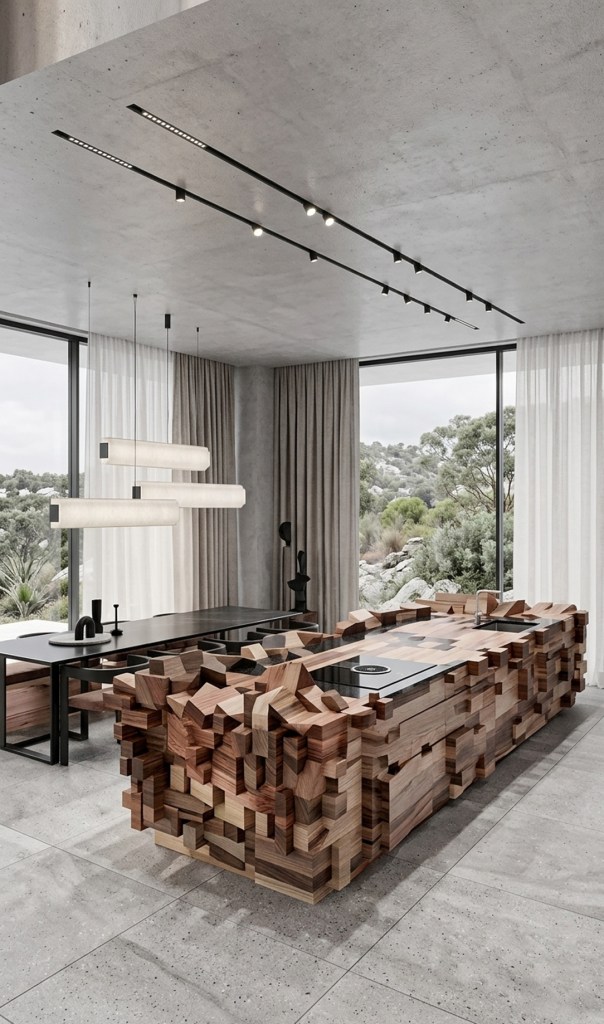
Texture, acoustics, lighting, materiality, and tonal balance all shape how a room is felt on a physical and emotional level. Harsh lighting, reflective finishes, poor acoustics, and strong contrast can create overstimulation, irritation, or even avoidance of space. Softer transitions, tactile surfaces, controlled lighting, and warmer tones make a space feel more comfortable and easier to inhabit.
Flow, Structure, and Emotional Stability
If movement between zones feels awkward, if transitions are abrupt, or if the layout disrupts the rhythm of daily life, the overall experience becomes disjointed. Flow is what allows a space to feel natural rather than forced.
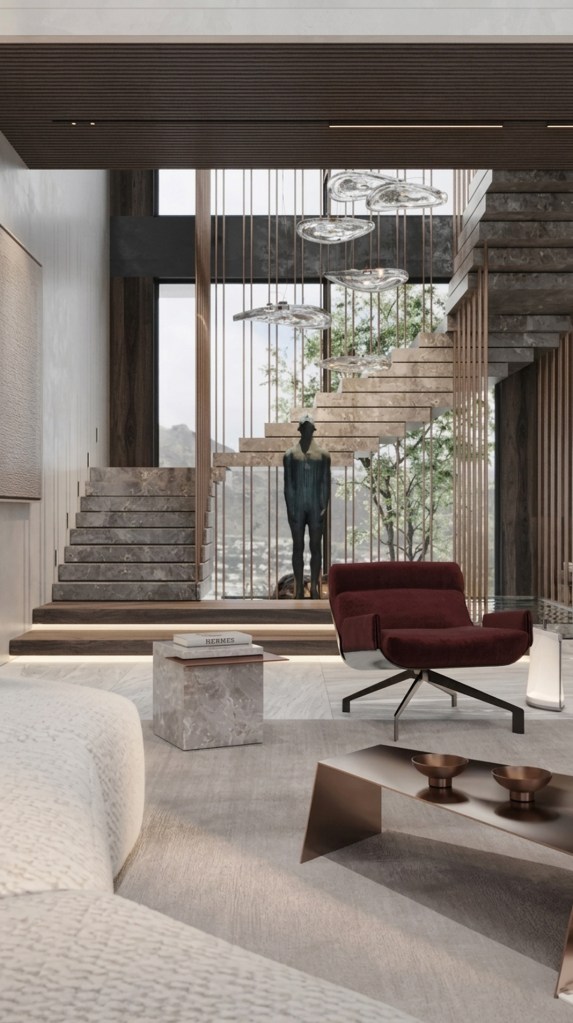
Structure also plays an important psychological role. In this context, masculinity in design is not about visual heaviness, but about direction, clarity, and control. A space without a clear centre can feel beautiful yet unfocused. A space with a strong axis, controlled paths, and a sense of spatial direction can create stability, physical alignment, and calm confidence.
Human-centric design is no longer an added extra. It is becoming the foundation of how meaningful homes are shaped. That means creating spaces that are visually refined and aligned with the people living in them. The strongest interiors do not simply look luxurious. They support clarity, confidence, and the way life is actually lived.