
Daily Guardian UAEDaily Guardian UAE
  • Home
  • UAE
  • What’s On
  • Business
  • World
  • Entertainment
  • Lifestyle
  • Sports
  • Technology
  • Travel
  • Web Stories
  • More
    • Editor’s Picks
    • Press Release
What's On

Abu Dhabi DoE Accelerates Industrial Energy and Water Efficiency

October 15, 2026

Natixis celebrates 20 years in Dubai International Financial Centre, underscoring deep commitment to the Middle East

October 14, 2026

Al Ansari Exchange Tests Voice AI as It Explores Agentic Applications

October 14, 2026

Joyalukkas set to unveil ‘Jewel of Joy’: The Middle East’s Biggest Jewellery Destination at Dubai Gold District

October 14, 2026

Dubai Land Department Showcases Real Estate Strength at RISE 2026

October 14, 2026
Facebook X (Twitter) Instagram
Finance Pro
Facebook X (Twitter) Instagram
Daily Guardian UAE
Subscribe
  • Home
  • UAE
  • What’s On
  • Business
  • World
  • Entertainment
  • Lifestyle
  • Sports
  • Technology
  • Travel
  • Web Stories
  • More
    • Editor’s Picks
    • Press Release
Daily Guardian UAEDaily Guardian UAE
Home » AI may be learning from billions of images without copying any one of them
Technology

AI may be learning from billions of images without copying any one of them

By dailyguardian.aeAugust 20, 20262 Mins Read
Share
Facebook Twitter LinkedIn Pinterest Email

Here’s an uncomfortable question for the generative AI era: if an AI creates an image, can anyone actually point to the specific images that influenced it? A new study from MIT’s Computer Science and Artificial Intelligence Laboratory suggests that, for sufficiently large models, the answer may often be no. Researchers Dai and Gifford describe the phenomenon as “attribution decay” in their open-access paper, published today in Nature Communications. It refers to how the influence of any individual piece of training data becomes increasingly difficult to detect as the size of the dataset grows.

The bigger the dataset, the fuzzier the attribution

The researchers wanted to test something more precise than simply asking whether an AI model had been trained on a particular image. Their approach was essentially a counterfactual: what happens if a specific piece of training data is removed?

They found that, as models and datasets scale, removing an individual image can make little or no measurable difference to the generated result. The same can apply when removing an entire artist’s work or images of a particular person. In other words, the model may have learned broad visual patterns from an enormous pool of data without any single image being clearly responsible for a particular output. MIT researchers Zheng Dai and Professor David Gifford argue that if removing a particular piece of data doesn’t change the output, it becomes difficult to attribute that output to the removed example meaningfully.

That doesn’t settle the AI copyright debate

To be fair, the study doesn’t mean training data is irrelevant, nor does it settle the broader debate over whether AI companies can use copyrighted material without permission. Instead, its focus is narrower: whether a specific training image can be shown to have directly influenced a specific AI-generated output. A model may not reproduce any particular artist’s work while still relying on millions of images to learn things such as composition, lighting, textures, and artistic styles.
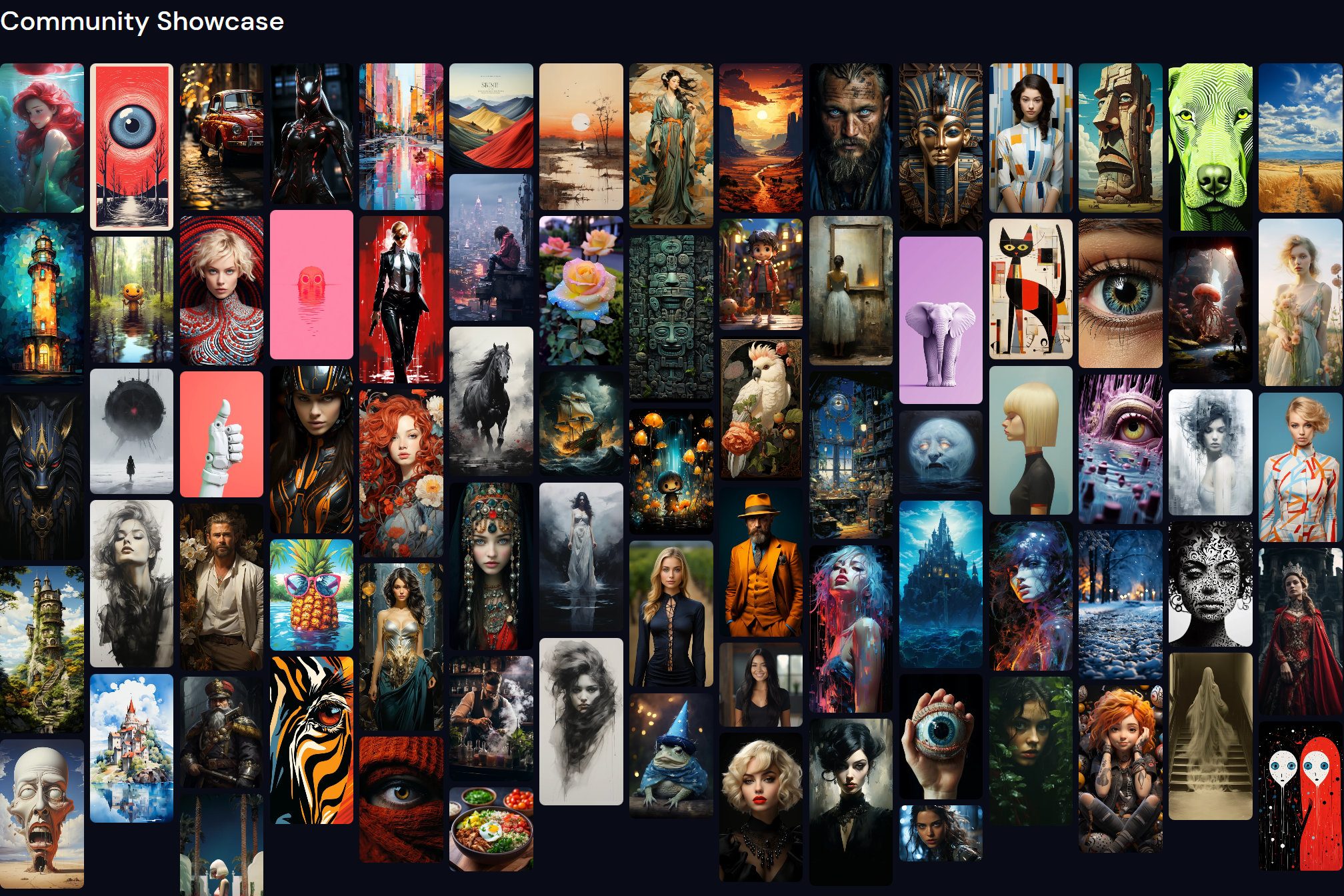
Midjourney is a versatile, high-quality AI art generator, as seen in the community showcase.

The more interesting takeaway is that this connection becomes increasingly difficult to trace as datasets grow. An AI-generated image may draw on patterns learned from an enormous pool of material without having a clear, identifiable source image behind it. The model may have learned from everyone, while leaving no single image with an obvious fingerprint on the final result.

Share. Facebook Twitter Pinterest LinkedIn Tumblr Email

Keep Reading

Lenovo AeroBlade imagines a laptop as thin as a foldable phone, thanks to solid-state cooling

Lenovo puts Nvidia RTX Spark into its new Yoga Pro laptops for local AI at IFA 2026

Motorola’s new Edge 70 Plus packs a 200MP camera and a massive battery

We got GTA VI limited-edition DualSense controllers before GTA VI

Anker unveils smarter chargers and power banks built to fight heat and battery degradation

Anker’s new Soundcore Sleep earbuds can mask snoring and even track your heart rate

TCL P80 series finally marries eye-friendly NXTPAPER tech with an AMOLED panel

Anker’s new MindBase wants to be the brain of your entire home security system

I found 5 cleaning deals worth sweeping up this Labor Day

Editors Picks

Natixis celebrates 20 years in Dubai International Financial Centre, underscoring deep commitment to the Middle East

October 14, 2026

Al Ansari Exchange Tests Voice AI as It Explores Agentic Applications

October 14, 2026

Joyalukkas set to unveil ‘Jewel of Joy’: The Middle East’s Biggest Jewellery Destination at Dubai Gold District

October 14, 2026

Dubai Land Department Showcases Real Estate Strength at RISE 2026

October 14, 2026

Subscribe to News

Get the latest UAE news and updates directly to your inbox.

Latest Posts

14th Global Sustainability & CSR Forum Drives Global Dialogue on Turning Sustainability Commitments into Lasting Impact

October 14, 2026

OMRAN Group and Hassan Allam Holding Partner to Launch First Phase of Residential Development in Madinat Al Irfan

October 14, 2026

PureHealth Retains MSCI’s Highest ESG Rating for Second Consecutive Year, Reinforcing its Position Among Global Sustainability Leaders

October 14, 2026
Facebook X (Twitter) Pinterest TikTok Instagram
© 2026 Daily Guardian UAE. All Rights Reserved.
  • Privacy Policy
  • Terms
  • Advertise
  • Contact

Type above and press Enter to search. Press Esc to cancel.