
Gaming headsets are great right up until I’ve been wearing one for three hours and desperately want my ears back. ASUS believes it has the answer with the ROG Gjallar. This is the brand’s first gaming soundbar to reach the US with a $599.99 price tag. Best Buy currently lists the system as sold out, while ASUS is taking notification sign-ups, so stock may be difficult to find initially.
At that price, this is pretty much a premium soundbar. But the Gjallar is more than just your typical soundbar.
Multiplayer without something clamped to my head
ASUS pairs the soundbar with a separate LCD control hub containing built-in microphones. Acoustic Echo Cancellation is designed to remove game audio and your teammates’ voices coming from the speakers, while AI beamforming suppresses ambient noise such as PC fans.
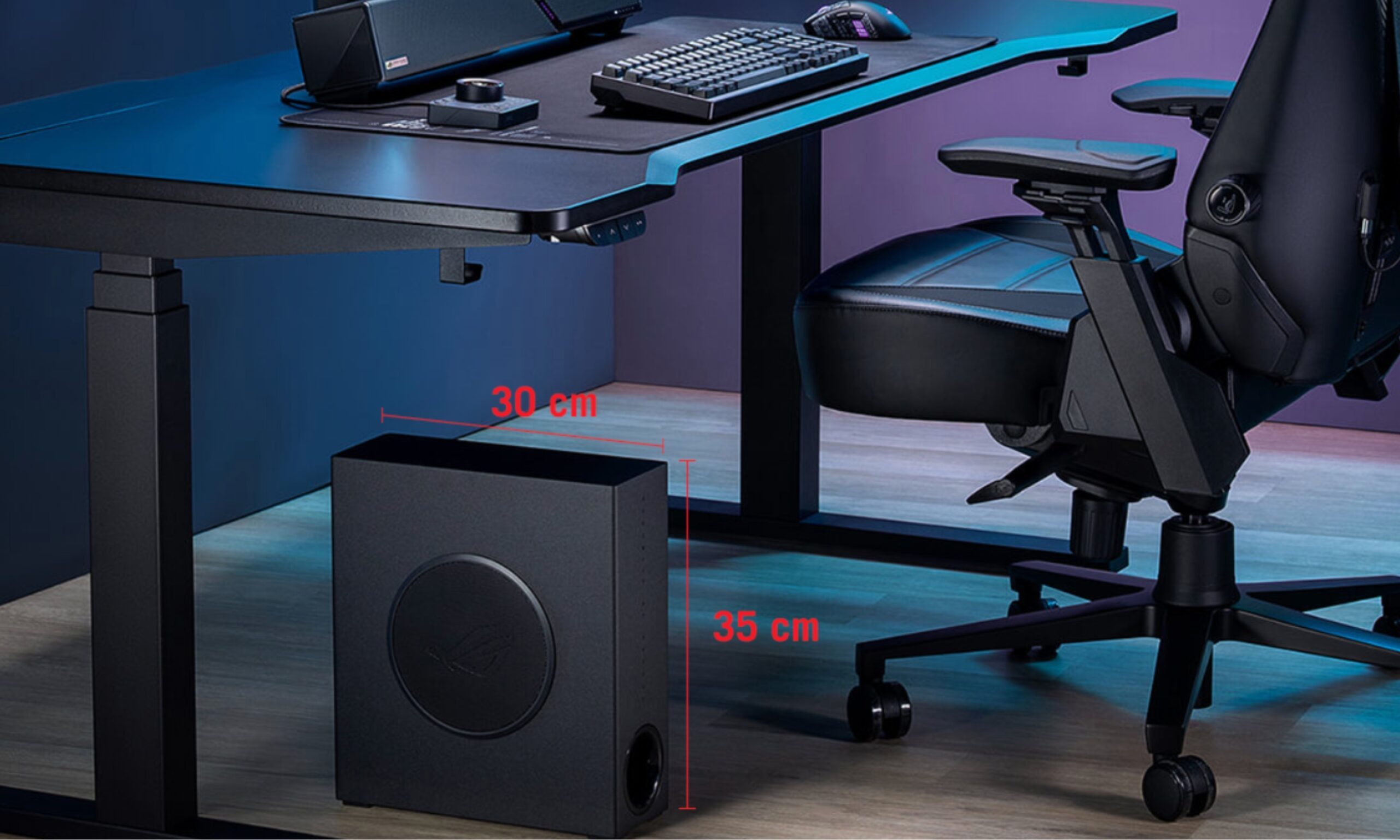
Thanks to this, users can play multiplayer games and still talk to their squad without putting on a headset or setting a standalone microphone on their desk. The Gjallar itself is a 2.1.2-channel Dolby Atmos system with four 50mm full-range drivers, two 27mm tweeters, and upward-firing channels. A separate 6.5-inch, 65W subwoofer connects over a dedicated low-latency 5GHz wireless link.
$600 gets you plenty of connectivity
ROG has packed the Gjallar with ports, making sure it can sit right in the middle of a complicated gaming setup. You get HDMI 2.1 with eARC and 4K/120Hz passthrough, USB-C, optical, 3.5mm AUX, and Bluetooth 5.3. It supports PCs, Macs, PlayStation, Xbox, Nintendo Switch, TVs, and mobile devices, while two USB-A ports can handle dongles and other peripherals.
The control hub can switch inputs, change EQ profiles, adjust playback, and control the obligatory Aura RGB lighting without diving into software. Six hundred dollars is a lot for desktop audio. During our review of LG’s $500 UltraGear GP9, we called out the gaming speakers for being difficult to justify despite excellent gaming audio and a built-in microphone. While ASUS is asking another $100, the Gjallar adds a proper wireless subwoofer, dedicated height channels, HDMI 2.1, and broader connectivity. Still, I’d need to hear it before deciding whether all of that is worth $600.