
Lenovo is taking its Yoga lineup into a more demanding AI era, announcing new creator-focused laptops powered by Nvidia’s RTX Spark platform at IFA 2026. The company says the new Yoga Pro 9n and Yoga 9n 2-in-1 are designed for people who need substantial computing power for AI development, content creation, software development and 3D rendering – without sending every workload to the cloud.
The announcement is part of Lenovo’s broader push to make AI a more integrated part of personal computing. Rather than treating AI as a collection of individual features, Lenovo is pitching these machines as systems capable of running increasingly sophisticated AI models locally.
RTX Spark turns the Yoga into a creator workstation
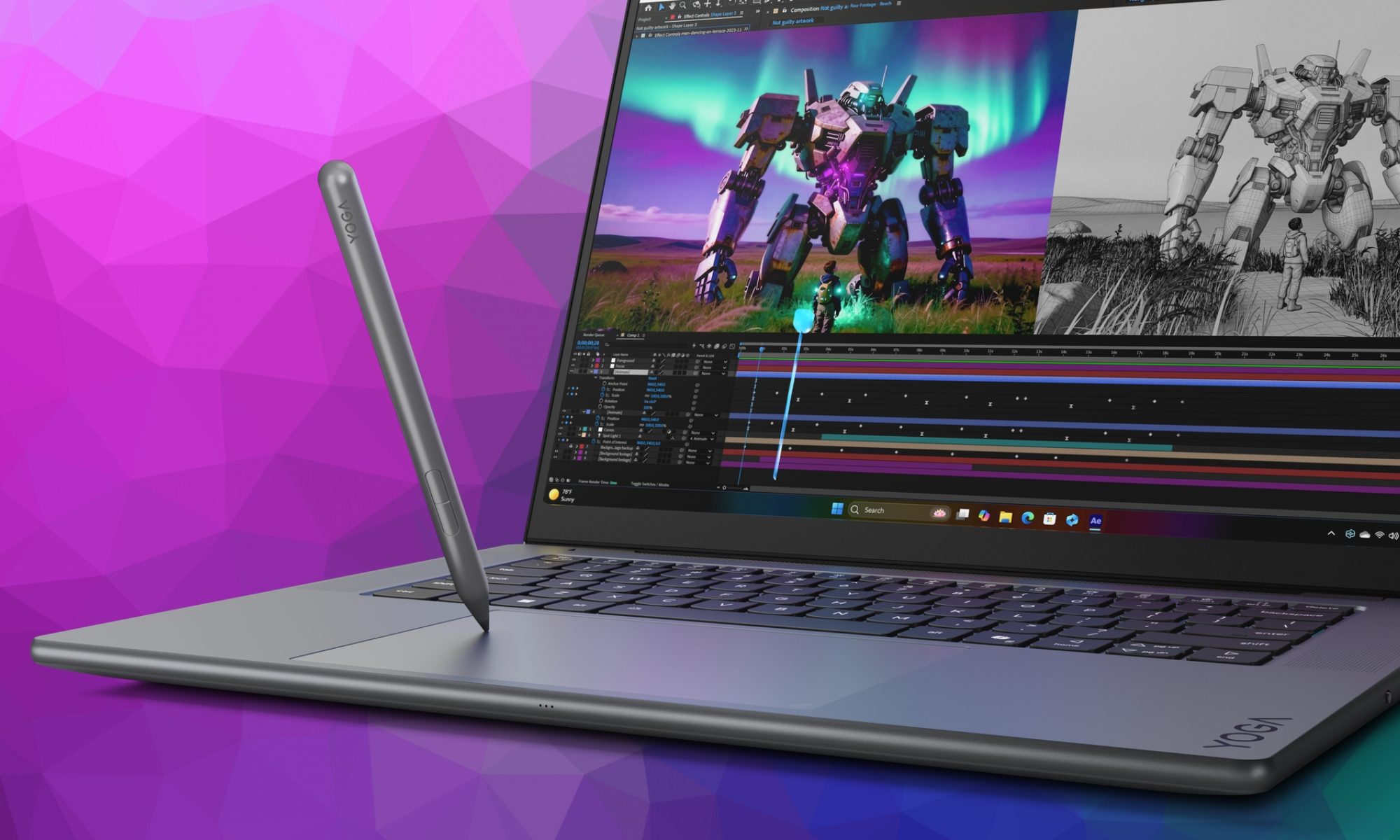
The Yoga Pro 9n (15-inch) is the performance-focused machine of the pair. It uses Nvidia RTX Spark and can be configured with up to 128GB of unified memory, while Lenovo says its RTX platform and CUDA software stack are designed to run advanced AI models locally. The system is also aimed at demanding video editing, 3D rendering, software development, and RTX gaming.
The laptop remains relatively portable, starting at 3.64 pounds (1.65kg) and measuring as little as 16.7mm thick. Its 15.3-inch PureSight Pro OLED display offers a 2.5K resolution, a 48-165Hz variable refresh rate, 100% sRGB and P3 coverage, and up to 1,100 nits of HDR brightness.
Lenovo is also using its X Power thermal architecture to help maintain performance inside the slim chassis. The machine supports up to 80W TDP, alongside two SSD slots and up to 4TB of storage.
The Yoga 9n 2-in-1 (16-inch) takes a more flexible approach. It supports up to 64GB of unified memory and combines RTX Spark with a 360-degree convertible design. Its unusual dual-surface pen system allows users to draw or write either on the OLED display or the haptic Force Pad.
Lenovo wants AI to follow your work
The hardware is only part of Lenovo’s pitch. The company is also introducing Lenovo Qira, its personal ambient intelligence system, alongside the Smart Canvas Concept. The idea is to let users capture ideas through different devices and input methods before continuing the same work elsewhere.
That includes the new Yoga tablets, which support pen, voice, vision and touch interactions. Lenovo says its AI tools can help with note-taking, transcription, creation and productivity, while the Smart Canvas concept connects compatible devices.
For users, the important shift is that AI is becoming less about asking a chatbot a question and more about giving the computer enough local power and context to participate in an entire workflow.
Lenovo has not yet announced pricing or availability for the Yoga Pro 9n and Yoga 9n 2-in-1. The company says those details will be revealed at a later date.
The bigger question is whether this new class of AI PC can make local AI powerful enough – and useful enough – to justify the hardware when these laptops eventually reach consumers.