
Artificial intelligence is getting surprisingly good at understanding humans. Now, Meta wants it to understand our brains too. The company has unveiled Brain2Qwerty v2, an upgraded AI system that can translate brain activity into full sentences, all without requiring brain implants or surgery. The goal isn’t mind reading for the masses. Instead, it’s to help people who have lost the ability to speak communicate again.
How a Brain-powered keyboard works
The easiest way to think about Brain2Qwerty v2 is as an incredibly advanced brain-powered keyboard. Volunteers wear a Magnetoencephalography (MEG) scanner, which measures tiny magnetic signals produced by the brain while they type. Instead of watching the keyboard, the AI watches those brain signals and predicts what the person intended to type.
The biggest leap over the original Brain2Qwerty is that it no longer tries to decode one letter at a time. Instead, it looks at characters, words, and entire sentences, using large language models to fill in the blanks, much like your smartphone predicts the next word while typing. Meta even describes the system as adding semantic understanding, allowing it to recover coherent sentences from extremely noisy brain signals.
Under the hood, the AI combines deep learning models such as Transformers and Convolutional Neural Networks with fine-tuned language models that act almost like a spellchecker for the brain. If the neural signal is incomplete or distorted, the language model uses context to infer what the user most likely intended to say. Meta also used AI agents to optimize the decoding pipeline itself, helping improve real-time performance.
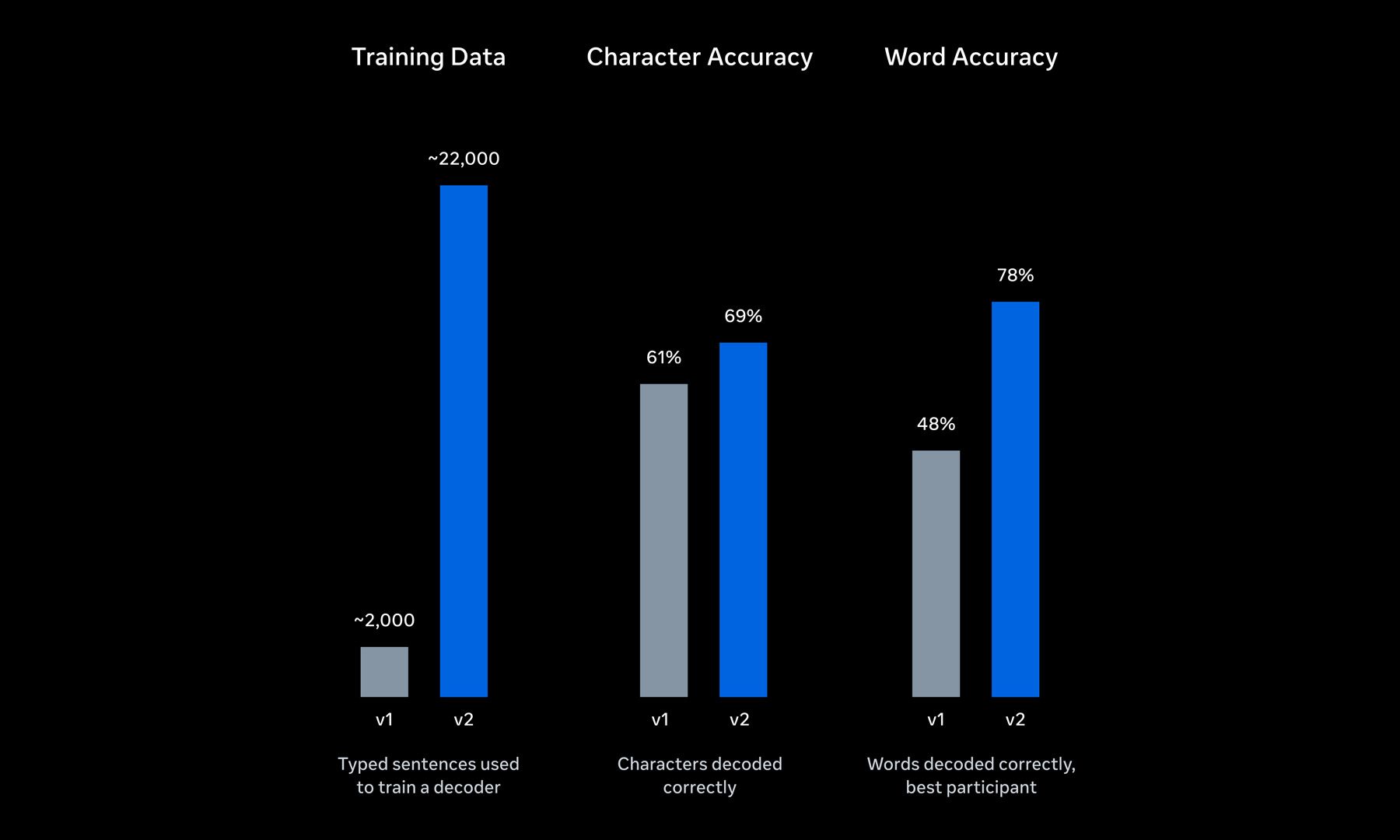
As highlighted in the official research paper, the system was trained using around 22,000 typed sentences collected from nine volunteers, each of whom spent roughly 10 hours wearing an MEG scanner while typing. Brain2Qwerty v2 currently achieves an average 61% word accuracy, while the best participant reached 78% accuracy, with more than half of their decoded sentences containing one word error or less. Meta has also open-sourced both the training code and dataset so other researchers can build on the work.
The magic of skipping surgery
The funny thing is that the biggest breakthrough here isn’t the AI. It’s the fact that it works without opening someone’s skull. Most high-performance brain-computer interfaces today, including Elon Musk’s Neuralink, rely on surgically implanted electrodes to achieve high accuracy. Brain2Qwerty v2 takes a very different approach by using a completely external Magnetoencephalography (MEG) scanner to read brain activity, eliminating the risks associated with intracranial implants while still achieving surprisingly strong results.
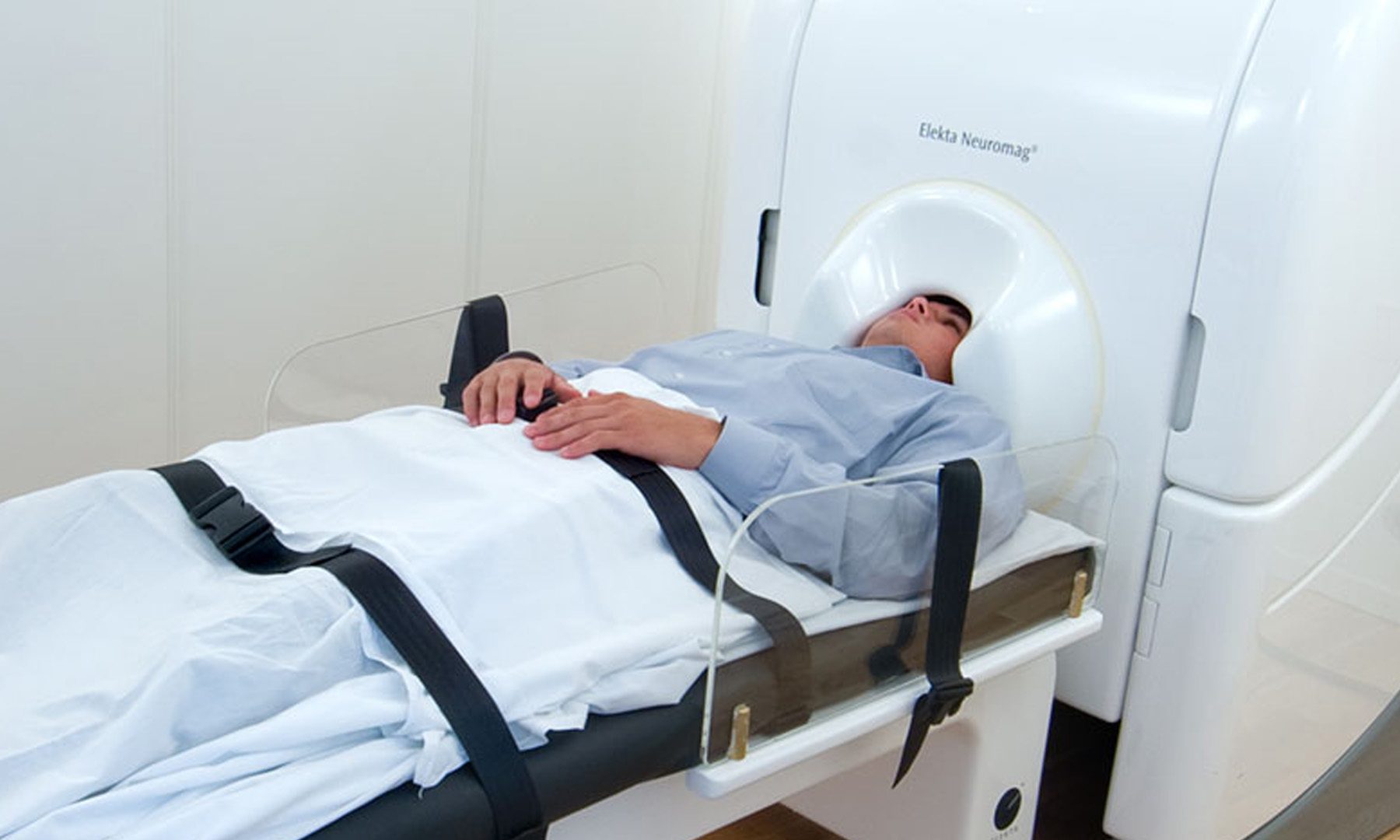
Meta is still a long way from building a consumer product, and nobody should expect to type emails using their thoughts anytime soon. The MEG scanners used by Brain2Qwerty are massive, expensive machines that belong in research labs, not living rooms. But by combining advances in neuroscience with modern AI, Meta is showing that non-invasive brain-computer interfaces may not be as far away as they once seemed. And for people who have lost the ability to communicate, that could end up being far more meaningful than any chatbot or image generator.