
Daily Guardian UAEDaily Guardian UAE
  • Home
  • UAE
  • What’s On
  • Business
  • World
  • Entertainment
  • Lifestyle
  • Sports
  • Technology
  • Travel
  • Web Stories
  • More
    • Editor’s Picks
    • Press Release
What's On

Sultan bin Ahmed visits charitable initiatives in Bali

September 19, 2026

Core42, TII Partner to Advance UAE Digital Sovereignty, Security

September 19, 2026

UBF CEOs Advisory Council Holds Quarterly Meeting

September 19, 2026

Sharjah Booksellers Conference Unites 912 Publishers from 99 Nations

September 19, 2026

Cosmo Developments launches AED 6 billion “THE WADI” project in Abu Dhabi

September 18, 2026
Facebook X (Twitter) Instagram
Finance Pro
Facebook X (Twitter) Instagram
Daily Guardian UAE
Subscribe
  • Home
  • UAE
  • What’s On
  • Business
  • World
  • Entertainment
  • Lifestyle
  • Sports
  • Technology
  • Travel
  • Web Stories
  • More
    • Editor’s Picks
    • Press Release
Daily Guardian UAEDaily Guardian UAE
Home » Scientists warn Elon Musk’s orbital data centers could blind Earth’s biggest telescopes
Technology

Scientists warn Elon Musk’s orbital data centers could blind Earth’s biggest telescopes

By dailyguardian.aeJuly 4, 20262 Mins Read
Share
Facebook Twitter LinkedIn Pinterest Email

The race to blanket Earth with satellite internet has unlocked faster connectivity for millions. But according to the European Southern Observatory (ESO), it could also make one of humanity’s oldest hobbies, and one of its most important sciences, a whole lot harder. The organization warns that the rapid growth of satellite mega-constellations could severely disrupt observations made by some of the world’s most powerful telescopes.

Astronomers say the night sky is reaching its limit

According to the ESO, the number of satellites orbiting Earth has exploded in recent years. Starlink alone now accounts for roughly 10,400 satellites, while before 2022, humanity had launched only around 14,450 satellites into space in total. With companies planning even larger constellations, including SpaceX founder Elon Musk’s long-term vision of up to one million orbital “data center” satellites, astronomers fear the problem is only beginning.

To understand the impact, ESO researchers simulated what increasingly crowded skies would mean for ground-based observatories. Their findings weren’t encouraging. Even if future satellites are dim enough to remain invisible to the naked eye, Europe’s Very Large Telescope (VLT) in Chile could lose 28% of its observable field of view. Slightly brighter satellites could have an even greater impact on the Vera C. Rubin Observatory, potentially rendering many of its images unusable for several hours every night.

The solution isn’t fewer launches, though

Importantly, the ESO isn’t calling for an end to satellite internet. Instead, it’s proposing an international cap of 100,000 faint satellites in low Earth orbit, arguing that such a limit would help balance global connectivity with the long-term needs of astronomy. Researchers also stress that satellite brightness matters just as much as the number of spacecraft, since brighter satellites scatter more sunlight and interfere with telescope images.
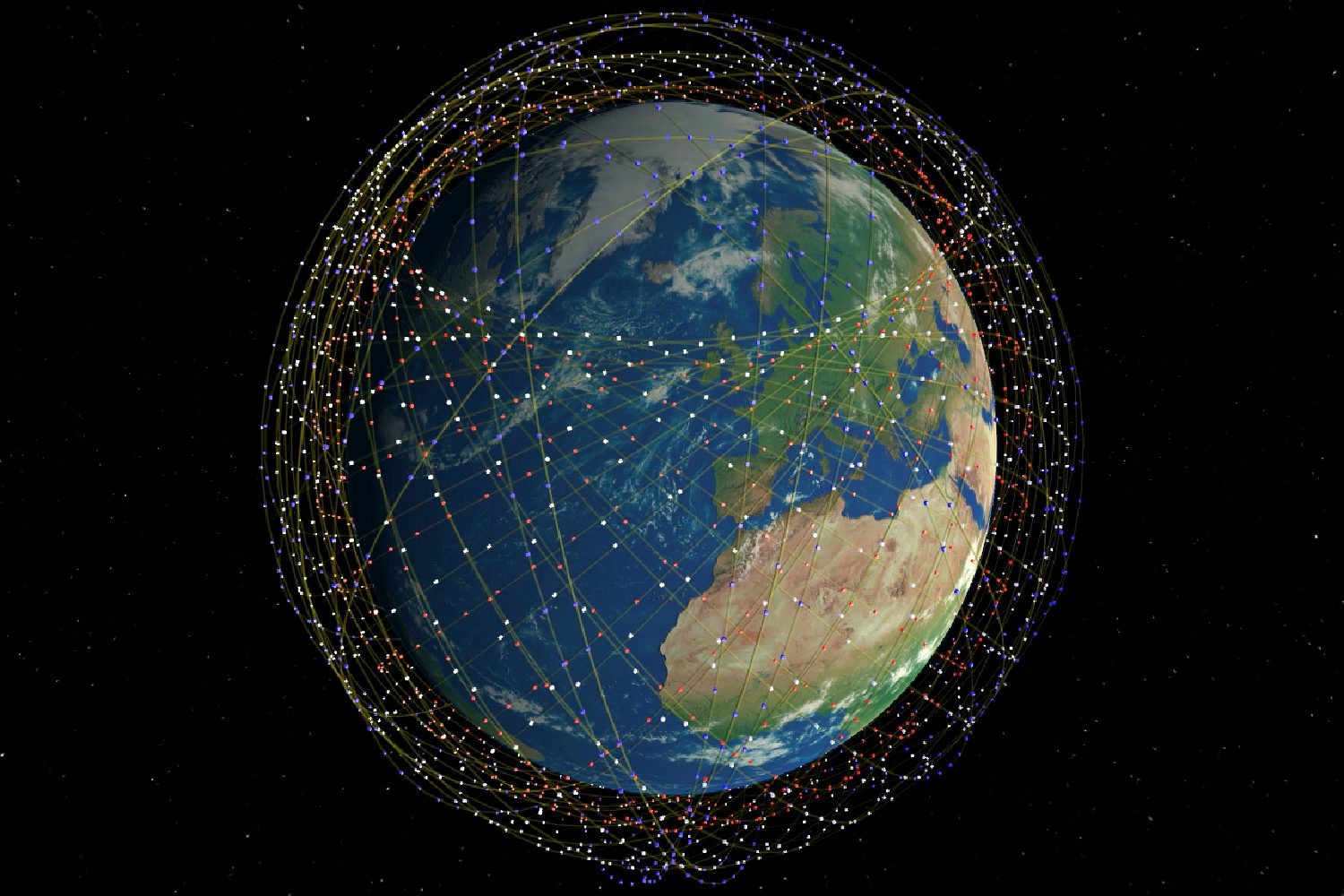
Starlink

The bigger takeaway is that this debate extends well beyond any one company. Starlink simply happens to be the largest constellation today, making it the easiest example. There’s also Amazon Leo, which is expected to launch later this year. As more companies pursue massive satellite networks, the challenge will be finding a way to expand internet access without turning Earth’s night sky into one giant obstacle course for astronomers.

Share. Facebook Twitter Pinterest LinkedIn Tumblr Email

Keep Reading

Lenovo AeroBlade imagines a laptop as thin as a foldable phone, thanks to solid-state cooling

Lenovo puts Nvidia RTX Spark into its new Yoga Pro laptops for local AI at IFA 2026

Motorola’s new Edge 70 Plus packs a 200MP camera and a massive battery

We got GTA VI limited-edition DualSense controllers before GTA VI

Anker unveils smarter chargers and power banks built to fight heat and battery degradation

Anker’s new Soundcore Sleep earbuds can mask snoring and even track your heart rate

TCL P80 series finally marries eye-friendly NXTPAPER tech with an AMOLED panel

Anker’s new MindBase wants to be the brain of your entire home security system

I found 5 cleaning deals worth sweeping up this Labor Day

Editors Picks

Core42, TII Partner to Advance UAE Digital Sovereignty, Security

September 19, 2026

UBF CEOs Advisory Council Holds Quarterly Meeting

September 19, 2026

Sharjah Booksellers Conference Unites 912 Publishers from 99 Nations

September 19, 2026

Cosmo Developments launches AED 6 billion “THE WADI” project in Abu Dhabi

September 18, 2026

Subscribe to News

Get the latest UAE news and updates directly to your inbox.

Latest Posts

PureHealth launches AI-powered solution to enhance access to healthcare services for Daman members

September 18, 2026

Panspectrum Training Solutions announces official Dubai launch

September 18, 2026

Help AG launches Quantum 360 at GISEC 2026 to advance post-quantum readiness in UAE

September 18, 2026
Facebook X (Twitter) Pinterest TikTok Instagram
© 2026 Daily Guardian UAE. All Rights Reserved.
  • Privacy Policy
  • Terms
  • Advertise
  • Contact

Type above and press Enter to search. Press Esc to cancel.