
Samsung Display has unveiled its latest smartphone display innovations at Display Week 2026, with a clear focus on improving brightness, color accuracy, and overall efficiency. The new developments are aimed at solving real-world issues – especially visibility in bright outdoor conditions and more accurate color reproduction for modern content.
Brighter Screens and Better Colors
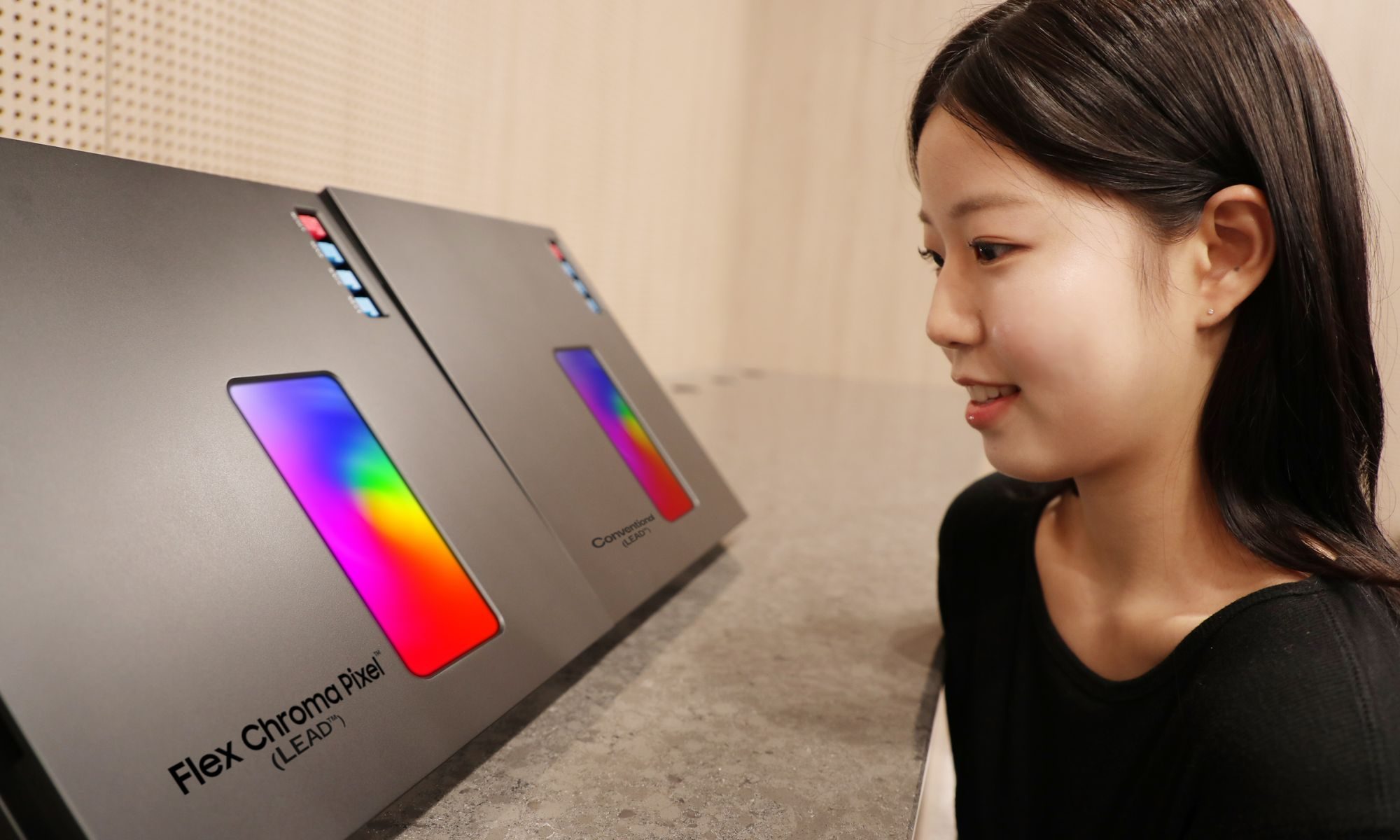
The highlight of the announcement is Samsung’s new “Flex Chroma Pixel” OLED panel, built specifically for smartphones. This panel can reach up to 3,000 nits of brightness in High Brightness Mode (HBM), which is a significant jump compared to most current smartphone displays.
This matters more than it sounds on paper. One of the biggest limitations of modern phones is how hard it can be to see the screen clearly under direct sunlight. By pushing brightness to this level, Samsung is addressing that exact problem, making screens easier to read outdoors without compromising durability. Most smartphones are able to achieve crazy levels of peak brightness – like that Huawei Mate 80 Pro Max, which gets to stratospheric levels of 8000 nits. However, the keyword here is peak brightness, which is very different than high-brightness mode.
Peak brightness or PBM mode only works on specific areas of the display and for short bursts of time; however, high-brightness mode is where the actual game is, and Samsung says it can hit 3000 nits in HBM, which is currently the highest in the industry. For your reference, the iPhone 17 Pro hits an HBM of 1600 nits and 3000 nits of peak brightness.
Alongside brightness, Samsung is also improving color performance. The panel covers up to 96% of the BT.2020 color space, compared to around 70% on most existing smartphones. This translates to richer and more accurate colors, especially when viewing HDR content. Since BT.2020 offers a much wider range than DCI-P3, the difference should be noticeable in real-world usage.
What’s Powering These Improvements
These gains aren’t just about turning up brightness. Samsung is using new materials and design changes to make it work efficiently. One of the key additions is phosphorescent sensitized fluorescence (PSF), which improves color purity and overall efficiency.
The panel also uses Samsung’s LEAD technology, which removes the need for a traditional polarizer. This helps the display maintain high brightness while consuming less power and preserving the lifespan of OLED materials. In simple terms, it allows the screen to get brighter without the usual downsides.
Sensor OLED Adds More Functionality
Samsung also showcased a new “Sensor OLED Display” with a resolution of 500 PPI, up from 374 PPI last year. That’s about a 33% increase, bringing it in line with high-end smartphone displays.
What makes this panel different is that it integrates organic photodiodes directly into the display. This allows it to measure biometric data like heart rate and blood pressure using light emitted from the screen itself. It’s an early look at how displays could take on more roles beyond just showing content.
What This Means Going Forward
These updates point toward a broader shift in smartphone displays. It’s no longer just about resolution or refresh rate. Brightness, color accuracy, efficiency, and added functionality are becoming equally important.
For users, this could mean phones that are easier to use outdoors, better for watching content, and potentially capable of handling new features without extra hardware.
While these technologies are still in the prototype stage, they give a clear idea of where smartphone displays are headed. Future devices are likely to be brighter, more efficient, and more capable than what we have today.