
Daily Guardian UAEDaily Guardian UAE
  • Home
  • UAE
  • What’s On
  • Business
  • World
  • Entertainment
  • Lifestyle
  • Sports
  • Technology
  • Travel
  • Web Stories
  • More
    • Editor’s Picks
    • Press Release
What's On

Huawei Brings Embedded Intelligence and Built-in Resilience to GISEC GLOBAL 2026

September 14, 2026

Mohammed bin Rashid visits Arabian Travel Market 2026

September 14, 2026

From Ambassador for Women Empowerment of the Kinéo Award to the Forbes Unconventional Excellence Award, the Uzbek model brings a new vision of female leadership to the Lido

September 14, 2026

OCTA Properties’ DLD and RERA recognition at IPS 2026 reinforces long-term position in Dubai Real Estate

September 14, 2026

Tetr College of Business Welcomes Third Undergraduate Cohort, Including a New Generation of UAE Talent

September 14, 2026
Facebook X (Twitter) Instagram
Finance Pro
Facebook X (Twitter) Instagram
Daily Guardian UAE
Subscribe
  • Home
  • UAE
  • What’s On
  • Business
  • World
  • Entertainment
  • Lifestyle
  • Sports
  • Technology
  • Travel
  • Web Stories
  • More
    • Editor’s Picks
    • Press Release
Daily Guardian UAEDaily Guardian UAE
Home » Solid-state cooling could be the secret to faster AI laptops
Technology

Solid-state cooling could be the secret to faster AI laptops

By dailyguardian.aeAugust 25, 20263 Mins Read
Share
Facebook Twitter LinkedIn Pinterest Email

Your next laptop’s biggest bottleneck might not be its chip; it could be how well it stays cool. A new white paper from Ventiva, developed alongside analyst firm Moor Insights and Strategy, argues that thermal design is quickly becoming the deciding factor for how fast AI laptops can actually run.

Why memory bandwidth is the real bottleneck

The paper explains that local AI performance is measured in tokens per second, and that number mostly comes down to memory bandwidth. Most laptops today still rely on 128-bit memory buses paired with LPDDR5 memory, which caps bandwidth around 150 GB per second. That is simply not fast enough to run today’s more demanding AI models at usable speeds, and chipmakers are already racing to fix this.

Qualcomm has pushed its Snapdragon X2 Elite chips to 192-bit buses, while AMD and NVIDIA now offer 256-bit options in their client silicon. Apple has gone furthest with its M5 Max, which uses a massive 512 bit bus capable of running large open source models like GPT-OSS 120 B entirely on device. The report expects this shift toward wider buses to accelerate further with the arrival of LPDDR6 memory, which promises faster data rates and better efficiency, with mainstream adoption expected by 2027 and 2028.

Here is the tricky part, though. Wider memory buses require memory chips to sit extremely close to the processor, inside traces shorter than 25 millimeters, exactly where fans and heat pipes have traditionally lived inside a thin and light laptop. Apple sidesteps this by placing memory directly on its chip package, but every other laptop maker has to solve the same spatial puzzle inside a traditional chassis.

Why fans may not be the answer anymore
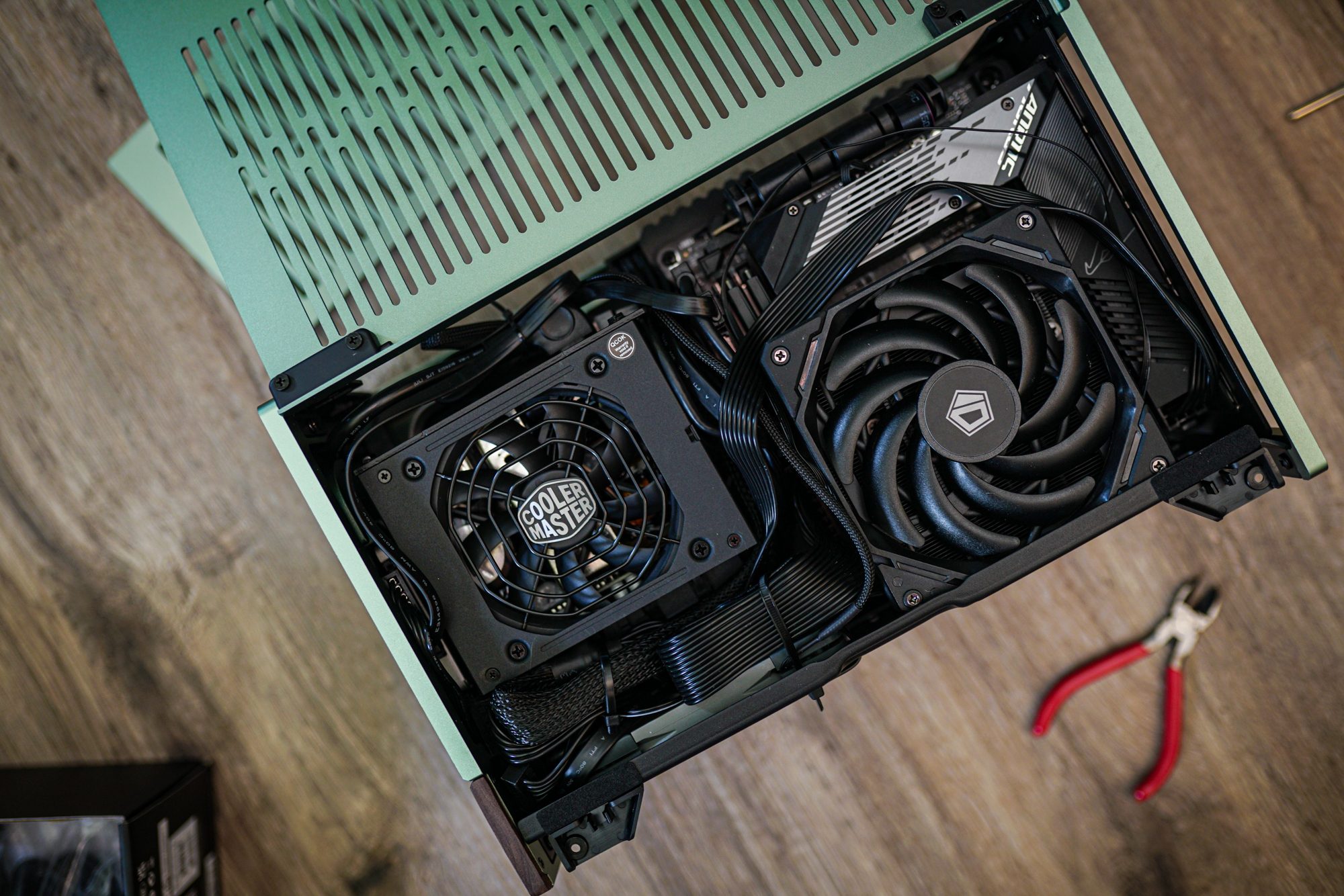
A small form factor build inside the Fractal Terra.

Traditional fan based cooling cannot keep scaling alongside these denser memory layouts, especially as chipmakers push toward 256-bit and wider buses. That is pushing solid-state cooling into the spotlight as a serious contender. The report highlights Ventiva’s ionic cooling platform, which uses charged particles to move air silently without any moving parts.

It also points to Frore’s AirJet technology, which recently proved itself by cooling an Intel reference laptop measuring just 11.3mm thin, sustaining 15 watts of fanless cooling while staying noiseless. Meanwhile, YPlasma showcased a plasma-powered laptop cooler at CES, using ionized gas instead of a spinning fan to move air, claiming operation at just 17 decibels.

The paper frames 2027 and 2028 as a real turning point, when wider memory buses and LPDDR6 would become the standard. If that timeline holds, laptop makers will need to rethink cooling instead of treating it as an afterthought.

Share. Facebook Twitter Pinterest LinkedIn Tumblr Email

Keep Reading

Lenovo AeroBlade imagines a laptop as thin as a foldable phone, thanks to solid-state cooling

Lenovo puts Nvidia RTX Spark into its new Yoga Pro laptops for local AI at IFA 2026

Motorola’s new Edge 70 Plus packs a 200MP camera and a massive battery

We got GTA VI limited-edition DualSense controllers before GTA VI

Anker unveils smarter chargers and power banks built to fight heat and battery degradation

Anker’s new Soundcore Sleep earbuds can mask snoring and even track your heart rate

TCL P80 series finally marries eye-friendly NXTPAPER tech with an AMOLED panel

Anker’s new MindBase wants to be the brain of your entire home security system

I found 5 cleaning deals worth sweeping up this Labor Day

Editors Picks

Mohammed bin Rashid visits Arabian Travel Market 2026

September 14, 2026

From Ambassador for Women Empowerment of the Kinéo Award to the Forbes Unconventional Excellence Award, the Uzbek model brings a new vision of female leadership to the Lido

September 14, 2026

OCTA Properties’ DLD and RERA recognition at IPS 2026 reinforces long-term position in Dubai Real Estate

September 14, 2026

Tetr College of Business Welcomes Third Undergraduate Cohort, Including a New Generation of UAE Talent

September 14, 2026

Subscribe to News

Get the latest UAE news and updates directly to your inbox.

Latest Posts

Malabar Gold & Diamonds Strengthens Its US Presence with the Launch of Its 9th Showroom in Seattle, Washington

September 14, 2026

4 Reasons Regenerative Real Estate Is the Future of UAE Development

September 14, 2026

US$148m healthtech investment puts GCC startups in focus at WHX Tech

September 14, 2026
Facebook X (Twitter) Pinterest TikTok Instagram
© 2026 Daily Guardian UAE. All Rights Reserved.
  • Privacy Policy
  • Terms
  • Advertise
  • Contact

Type above and press Enter to search. Press Esc to cancel.